

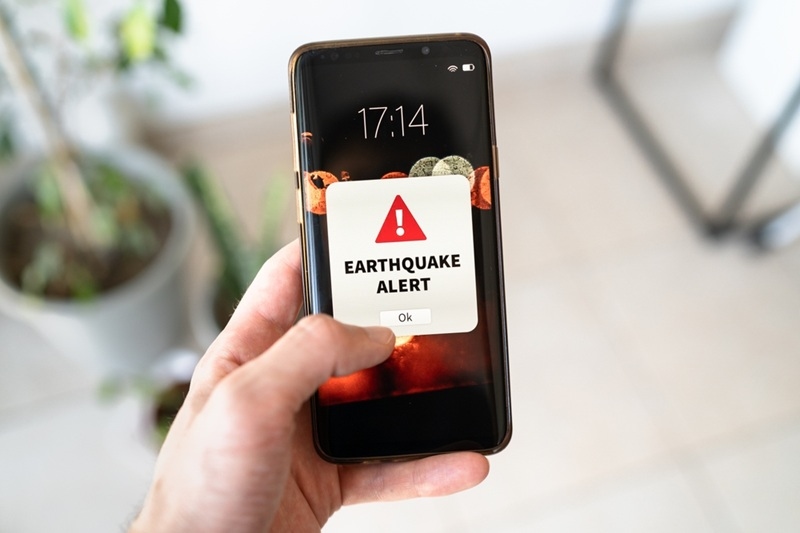
An earthquake can happen with no warning to victims about whether they have time to move away. But with technological advancements, there is now an earthquake early warning system (EEWS) that provides seconds of advance warning of strong shaking, helping keep individuals safe. EEWS uses technology to monitor seismic activity and an advanced earthquake-detection system, enabling rapid notification via a communication network. The system provides immediate alerts to the citizenry to reduce injuries and damages.
In today's world, many governments, scientists, and disaster management entities are making significant investments to improve their ability to prepare for disasters by developing new systems and technologies able to warn of impending disasters within their respective areas (the one exception is the United States Geological Survey - USGS). USGS and the Federal Emergency Management Agency (FEMA) both believe that using early warning devices (at least one type of EEWS) can greatly reduce deaths, injuries, and damage from disasters such as earthquakes, tsunamis, floods, hurricanes, and tornadoes.
So what do these devices do and how do they work? To understand the importance of EEWS in global disaster preparedness, let's examine the science, technology, and real-world benefits of these lifesaving devices.
An earthquake early warning system detects the first seismic waves and sends alerts before stronger waves arrive. The total amount of warning time available can range from a few seconds (or seconds to minutes, but even just this short window of time can help save a significant number of lives.
A core component of any earthquake early warning system is advanced seismic monitoring technology. This technology uses a large number of sensitive seismic sensors located across areas at high risk of earthquakes.
The sensors are used to constantly monitor ground motion. When a fault begins to slip and generate seismic waves, the sensor detects the initial slip vibrations as quickly as possible. The sensor data is then sent to a processing centre, which uses algorithms to analyze it and determine the magnitude, location, and expected impact of the event.
The most advanced forms of seismic monitoring technology will be able to process seismic data in as little as seconds, enabling rapid decisions on whether to issue earthquake alerts.
Seismic detection systems depend on studying seismic activity to determine the type and speed of seismic waves in real time. Existing seismic detection systems can identify two types of seismic waves, which consist of:
1. P-waves (primary), which generally have the highest speed but the least amount of damaging properties.
2. S-waves (secondary), which generally have lower speeds but do possess the most damaging characteristics.
The earthquake early warning detection system uses a combination of P- and S-wave speed factors to predict when the S-wave will arrive based on when the P-wave passes through the detection system, thereby enabling agencies to provide alerts before significant shaking occurs.
Seismic detection systems become more robust through additional research funding and support to improve existing systems and enhance international networks for disaster preparedness, through organizations such as the National Oceanic & Atmospheric Administration.
Don't miss out: Earthquake Preparedness Tips For Safer Homes And Families
An early warning system’s key function is to provide a sufficient window for individuals to safeguard against the impending highest levels of vibration associated with earthquakes; with an elapsed time of 10-30 seconds, it can provide individuals sufficient opportunity for protection.
Various means of transmitting earthquake alerts include:
Once alerts are distributed regarding earthquakes, automatic safety precautions are being initiated as of now:
These automatically activated safety precautions are examples of the integrated disaster warning systems designed to prevent death, injury, and unintended incidents following an earthquake.
Many governments around the world are assembling national disaster warning systems to issue alerts for earthquakes, tsunamis, floods, and severe weather.
Countries along the Pacific Ring of Fire invest heavily in disaster warning systems because they face significant earthquake risk. In doing so, these nations combine seismic monitoring technology, satellite communication, and automated control of infrastructure.
The Japan Meteorological Agency has the world's most advanced earthquake early warning system and issues alerts for several million earthquakes each year.
Expand Your Knowledge: Family Safety Plan: Earthquake Preparedness & Risk Reduction
Many individuals wonder whether earthquake prediction technologies provide the same level of notice as warning systems.
Techniques for predicting earthquakes are still a work in progress; scientists have not been able to predict earthquakes days or weeks in advance, and much research still needs to be done. Prediction technologies are being refined through studies of increased fault activity, changing terrain, and shifting Earth's surface due to earthquakes.
Early warning systems are the next best thing to advanced notice, as they can issue an alert immediately after an earthquake is detected.
Research into new earthquake prediction technologies is using emerging approaches to improve our ability to predict earthquakes:
Scientists working with the National Science Foundation and other institutions are constantly pushing the boundaries of current prediction technologies in the hope of developing new and improved warning systems by researching the causes of earthquakes.
Natural disasters, such as earthquakes, are among the most unpredictable forces in the world. However, advances in technology have significantly improved our ability to respond quickly and minimize earthquake damage.
By combining seismic monitoring, state-of-the-art earthquake detection systems, rapid alerts on earthquake likelihood, and disaster mobile information systems into a comprehensive system, community members can receive complete safety assurance for their neighborhoods as quickly as possible.
While earthquake prediction technology does not currently allow us to receive weeks or months of notice, there have been great strides in detecting earthquakes, saving lives, and creating a safer global neighbourhood through advancements in early detection systems.
As government agencies fund the future development of web-enabled, globally coordinated early warning networks into more advanced formats to alert citizens in different regions or continents to possible earthquake hazards before they actually feel them, communities will have increased time to react and protect their property and individuals from earthquakes.
An EEW system detects the initial shaking of an earthquake using seismic monitoring equipment and sends out a fast alert before the strong shaking hits. This can enable people and infrastructure to take protective action.
The latest seismic detection systems can be very precise; earthquakes can be detected in near-real-time - within seconds - of them occurring. These systems use a combination of equipment to provide timely earthquake alerts in many types of disaster warning systems around the world.
Although we cannot yet accurately predict an earthquake many days in advance, EEW systems serve as immediate detection and warning of an earthquake that has just started, thereby facilitating damage reduction and saving lives.
This content was created by AI