

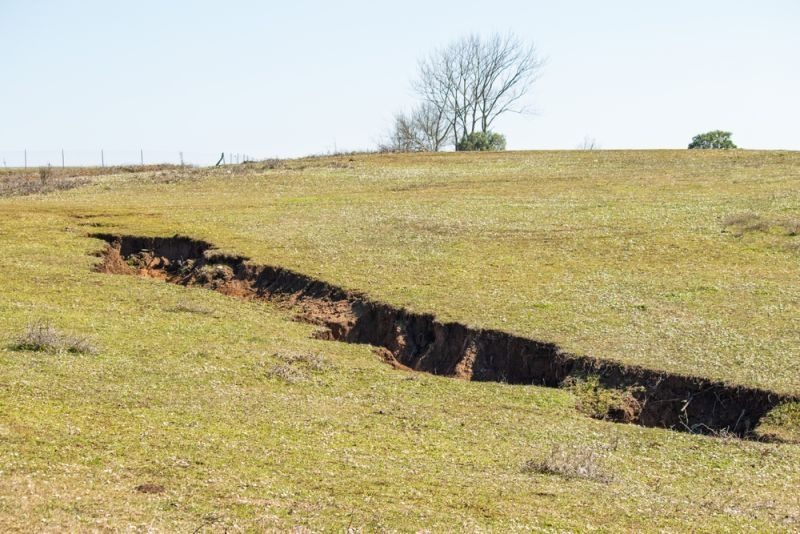
How much the ground shakes depends on a few things: how deep the quake is, how far you are from where it starts, what kind of soil you’re on, and just how strong those seismic waves are. Some places get a gentle shake; others feel like the world is coming apart.
Most quakes come from the slow grind of Earth’s tectonic plates. These plates move a few centimetres each year, but they don’t slide smoothly. Sometimes, friction locks them together. Tension builds up. Eventually, the rocks break or slip along old cracks—those are faults. When rocks finally give, all that tension explodes as seismic waves.
And it’s not just at plate boundaries. Quakes can strike away from them, and not every quake leaves disaster behind. The amount of damage depends on the depth, the ground conditions, and how buildings are put together. This blog dives into what causes earthquakes, how faults release energy, and why your experience during an earthquake can depend so much on where you are.
An earthquake boils down to this: rocks get squeezed and pushed until the stress is too much, and then they break loose along a fault, letting go of all that tension.
The Earth’s crust is split into big chunks called tectonic plates. These plates creep along, scraping up against each other with rough edges. Friction holds lots of these spots tight, and as the plates keep moving, the stress builds up.
Eventually, the pressure beats the friction. The rocks slip, energy bursts out, seismic waves ripple, and the ground shakes. That’s pretty much how most earthquakes work.
Earthquake fault lines are cracks where rocks have moved relative to each other. The underground spot where all the action starts is called the focus or hypocentre. Directly above, on the surface, is the epicentre.
Say a locked fault slips a few feet—suddenly, nearby rocks shift, and vibrations race across the ground. Sometimes the rupture spreads out, depending on how big the quake is and what kind of fault it sits on.
More to Discover: Ghost Lanterns: Can Earthquake Lights Predict Seismic Event?
That’s why you see earthquakes clustering in certain places—especially where plates meet, crash together, drift apart, or grind past each other.
At convergent boundaries, plates push together. One plate might sink under another, or the crust buckles up. Divergent boundaries pull apart, and transform boundaries slide sideways.
Those movements are constantly making faults and building up pressure. When the rocks can’t hold anymore, boom—an earthquake.
That’s why earthquakes are so common around the Pacific Ring of Fire—there’s a bunch of active plate boundaries circling that ocean.
Think of faults as weak spots in the crust. When enough stress piles up there, rocks finally give way. Some faults stay locked for ages. Others slip more often but only in little bursts.
The timing and size of earthquakes isn’t simple. A fault can produce a bunch of quakes, but nobody knows exactly when or how big the next one will be. Scientists keep an eye on seismic activity and how the ground shifts, but predicting the exact date or size? Not possible.
Earthquake science digs into how these forces build up, how rocks react, and why faults don’t stay locked forever.
Tectonic forces deform rock around a fault. Even if the fault’s stuck, the rocks nearby are stretching and bending—like a compressed spring, storing energy.
When the resistance gives way, the fault slips fast. That’s what elastic rebound theory is all about: rocks get squished, break, and move to a less strained spot. The timing depends on underground conditions—friction, fluids, and the fault’s structure.
Most earthquakes connect to tectonic movement, but other stuff can set them off, too: volcanic action, underground fluids, and even human activities can mess with the stress down below.
Here’s how some of that happens:
Not every industrial activity causes an earthquake, and these triggers work in different ways.
Also Read: Earthquake Science: Causes, Impacts & How to Prepare
When a fault breaks, energy travels as seismic waves. That’s what people actually feel: the ground shaking.
There are two main types—body waves travel through the Earth’s interior, and surface waves move along the outer layers.
| Wave type | How it moves | Typical effect |
|---|---|---|
| P waves | Compress and expand material | Arrive first; it is usually less damaging. |
| S waves | Move material sideways or up and down. | Cannot travel through liquids |
| Love waves | Move the ground horizontally. | Can produce strong sideways shaking |
| Rayleigh waves | Roll the ground in an elliptical motion. | Can create rolling surface movement |
The shaking depends on wave size, depth, distance, and local geology. Magnitude measures the size of an earthquake at its source. Intensity, though, tells you how strongly the ground shakes in a specific spot.
A deep, big quake might barely be felt far away, while a small, shallow one can really rattle a neighbourhood. Your local ground matters too. Soft sediments can make shaking worse. Poorly built structures suffer more, and longer shaking stresses buildings, bridges, and utilities.
Quakes don’t just happen near plate edges. Some pop up inside plates, along ancient buried faults.
Sometimes stress from plate movement travels deep and far, reactivating old faults. Underground pressure shifts can also help a fault slip.
The central and eastern US, for instance, have had damaging quakes far from active plate boundaries. Their causes can be tricky to pinpoint, since faults might be buried beneath thick layers of sediment.
Don’t Miss: How Scientists Find the Epicenter of an Earthquake Easily
Earthquakes come down to stress, friction, and sudden movement in the crust. Plates keep shifting, faults get stuck, pressure builds, rocks give way—and energy shoots out as seismic waves. Volcanoes and human activity can trigger quakes, but tectonic forces are behind most of it.
The effects? It’s not just about how big the quake is. Depth, distance, the ground underfoot, and how things are built all matter. Earthquake science can’t predict the exact time or place, but if we study faults, build strong structures, and plan ahead, we can lower the risks.
People notice strange animal behaviour before some quakes, but there’s no solid evidence that animals can reliably warn us where or when a big one will hit.
Regular rain or changes in temperature don’t set them off. Shifts in air pressure or added water weight can slightly change local stress, but tectonics are the main driver.
After a big quake, the stress around the fault shifts. The surrounding rocks need time to settle, so aftershocks keep rolling in—sometimes for days or even months.
No. They can estimate the odds in certain areas and send out alerts after a quake begins, but no one can give advance notice of the exact spot, time, or size.
“Tremor” often means mild or ongoing ground movement, sometimes tied to volcanoes. Earthquakes are sudden bursts of energy that send out seismic waves. In everyday talk, the words sometimes get mixed up, but that’s the basic difference.
This content was created by AI